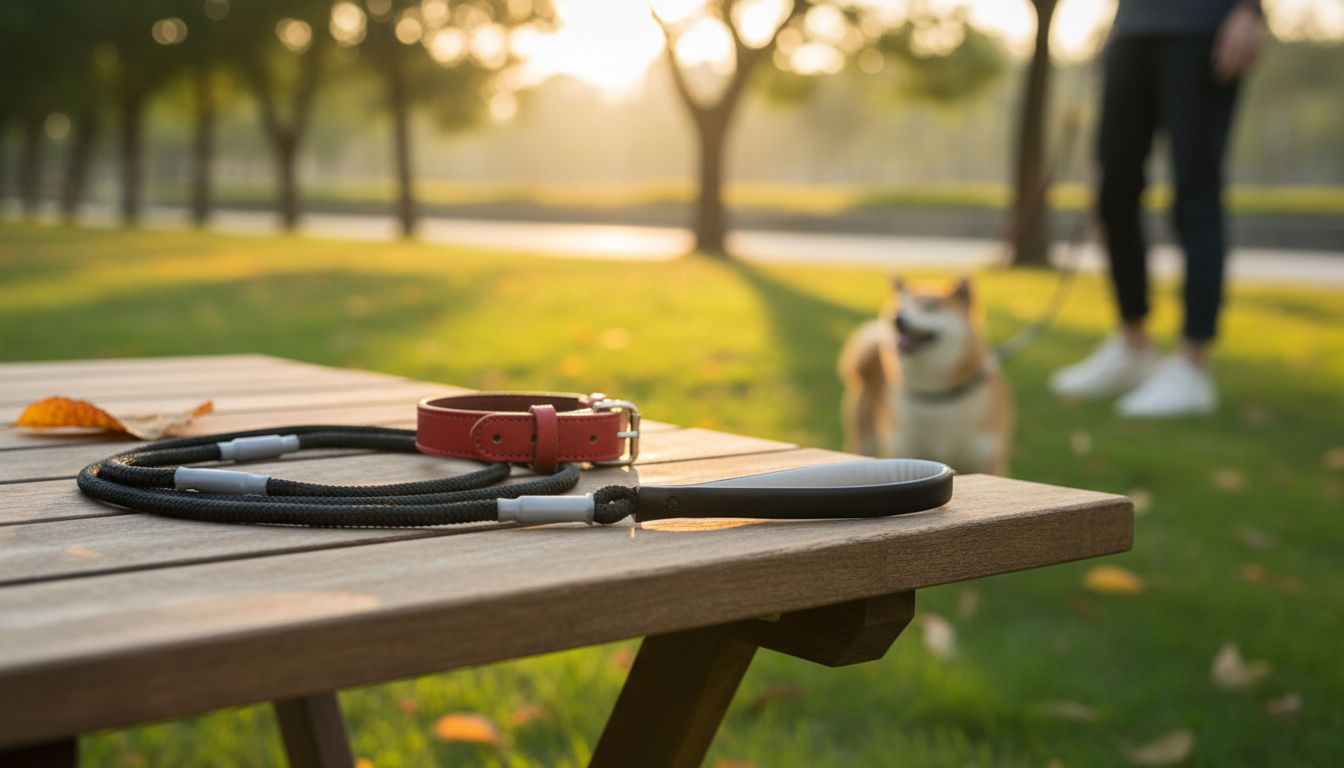
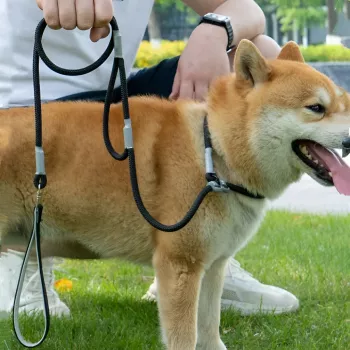
A traffic handle is a short, secondary handle built into a dog leash—usually positioned closer to your dog than the main loop. Its job is simple: give you fast, close control when you need your dog right by your side. Instead of pulling several feet of leash in your hands, you grab the traffic handle and instantly shorten the distance between you and your dog.
Most standard leashes have one handle at the end. A traffic handle adds a second grip point nearer the clip. When you’re walking normally, you use the regular handle for a comfortable amount of slack. When a high-control moment pops up—like passing another dog, stepping off a curb, or moving through a tight area—you switch to the traffic handle to keep your dog close and steady.
A traffic handle shines in “close quarters” situations where safety and manners matter. Common examples include busy sidewalks, crowded parks, outdoor patios, parking lots, vet office entrances, and crosswalks. It’s also handy for quick management during training, like reinforcing a tight heel or preventing leash tangles in narrow spaces.
The biggest benefit is speed: you can gain control immediately without wrapping leash around your hand. It can also reduce sudden lunges by giving you a more secure, close grip. That said, a traffic handle isn’t a substitute for training, and it’s not meant to keep your dog close for an entire long walk. Many dogs do best alternating between normal leash length and short-control moments.
For a deeper look at how traffic handles are designed, when to use them, and what to look for in a quality leash, read the full guide here: https://furtastictails.shop/what-is-a-traffic-handle-on-a-dog-leash/.
It can help in the moment by letting you shorten the leash quickly and keep your dog close when passing triggers. For best results, pair it with positive training and enough distance whenever possible to prevent escalating reactions.









Leave a comment