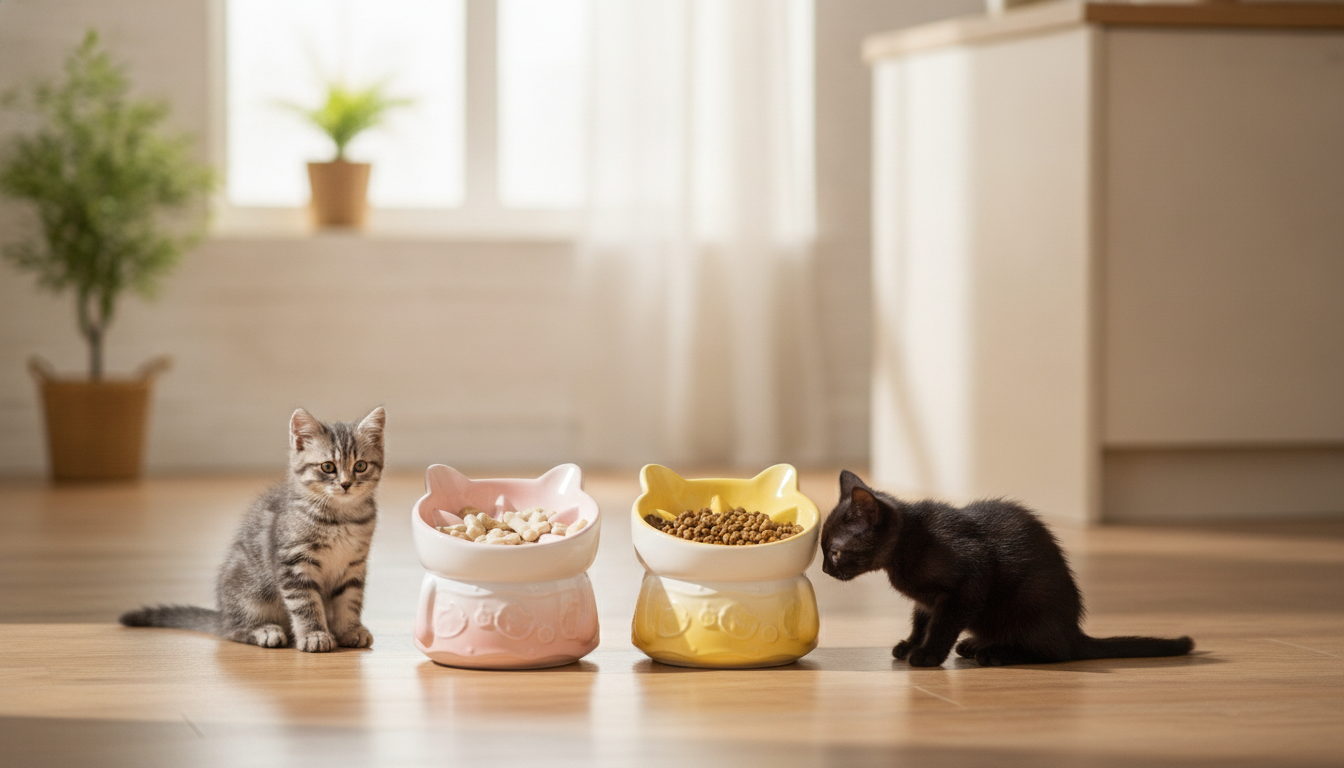
Fast eating can turn meals into stress—gulping, mess, and uncomfortable swallowing. A tall, footed slow-feeding bowl combines raised height with a shaped interior that helps pets pace themselves, supporting a steadier bite-by-bite rhythm and a tidier feeding area. For many households, the right bowl is a small change that makes daily feeding feel noticeably calmer.
Some pets don’t just eat quickly—they “race” their meals. Over time, that habit can create a pattern of noisy gulping and frequent cleanup.
If your pet regularly seems distressed while eating, it’s worth discussing feeding setup and symptoms with a veterinarian. General feeding and nutrition guidance can also be found through the American Veterinary Medical Association (AVMA) and the American Kennel Club (AKC).
Slow-feeding bowls are designed to interrupt the “vacuum effect” that lets pets pull in large mouthfuls at once. Instead of relying on willpower, the bowl changes the mechanics of the meal.
The goal isn’t to frustrate your pet—it’s to add just enough challenge to slow the pace and smooth out the eating rhythm.
Elevation and stability can matter as much as the slow-feeder pattern. A tall, footed profile changes how your pet approaches the bowl and how the bowl behaves on the floor.
In multi-pet homes, a stable, elevated bowl can also cut down on “drive-by” bumps that turn feeding into a noisy scramble.
Material choice affects everything from cleanliness to how often the bowl migrates across the kitchen. Ceramic is a popular option for households that want a sturdy, easy-to-wash feeding setup.
A simple routine—wash, inspect, and replace if chipped—helps keep ceramic bowls safe and pleasant to use day after day.
| Pet type | Best bowl height goal | Interior pattern depth | Notes |
|---|---|---|---|
| Small dogs & cats | Low-to-moderate elevation | Shallow-to-medium ridges | Prioritize comfort and easy access to the last bits of food |
| Medium dogs | Moderate elevation | Medium ridges | Aim for steady pacing without frustration |
| Large dogs | Moderate-to-taller elevation | Medium-to-deeper ridges | Choose a heavier bowl or a non-slip mat to prevent sliding |
| Seniors or pets with stiffness | Elevation that reduces bending | Gentle-to-medium ridges | If the pet seems stressed by obstacles, choose a milder slow-feeder pattern |
For households that want one practical upgrade that addresses both speed and mess, the Ceramic Tall Footed Slow-Eating Pet Bowl – Anti-Choking Design combines a raised, footed profile with a slow-feeding interior built for calmer pacing.
It can help many pets pace themselves, but persistent coughing, gagging, or regurgitation should be evaluated by a veterinarian. Start with a gentler slow-feeder pattern and supervise meals to ensure your pet stays comfortable.
Elevation can make eating more comfortable for some pets, but digestion benefits vary by individual. Choose a height that supports comfort and stability, and follow veterinary guidance for pets with specific medical concerns.
Rinse right after meals, then wash with warm soapy water using a soft brush to reach the ridges. Replace the bowl if the glaze chips or cracks so food and bacteria don’t collect in damaged areas.








Leave a comment